

For Uber Advertising, the Journey Is the Destination
The captive audience has long been the holy grail of advertising. But what about the audience that is literally captive, buckled into the backseat of a car with an average of 20 minutes to spare?
Uber Advertising recently surpassed a $1.5 billion annual run rate and is growing at a rapid clip. The goal is to transform passive travel time into an active, engaging experience for consumers and a valuable touchpoint for brands.
“What we are building here is really harnessing the scale of Uber as a whole with the ability to reach and match advertisers’ brand objectives,” said Jess Shuraleff, director, head of US&C sales, Uber Advertising, in this video interview with Beet.TV.
Putting content in the car
At the heart of this in-car media push is JourneyTV, a platform that places screens in the backseats of Uber vehicles. Through a partnership with T-Mobile, which provides the hardware, the experience is designed to be more than just a rolling billboard.
According to Shuraleff, a rider is greeted by a screen personalized with their name and trip details, alongside information about the driver, creating an immediate point of connection in what she called a “leaned in engaged experience.”
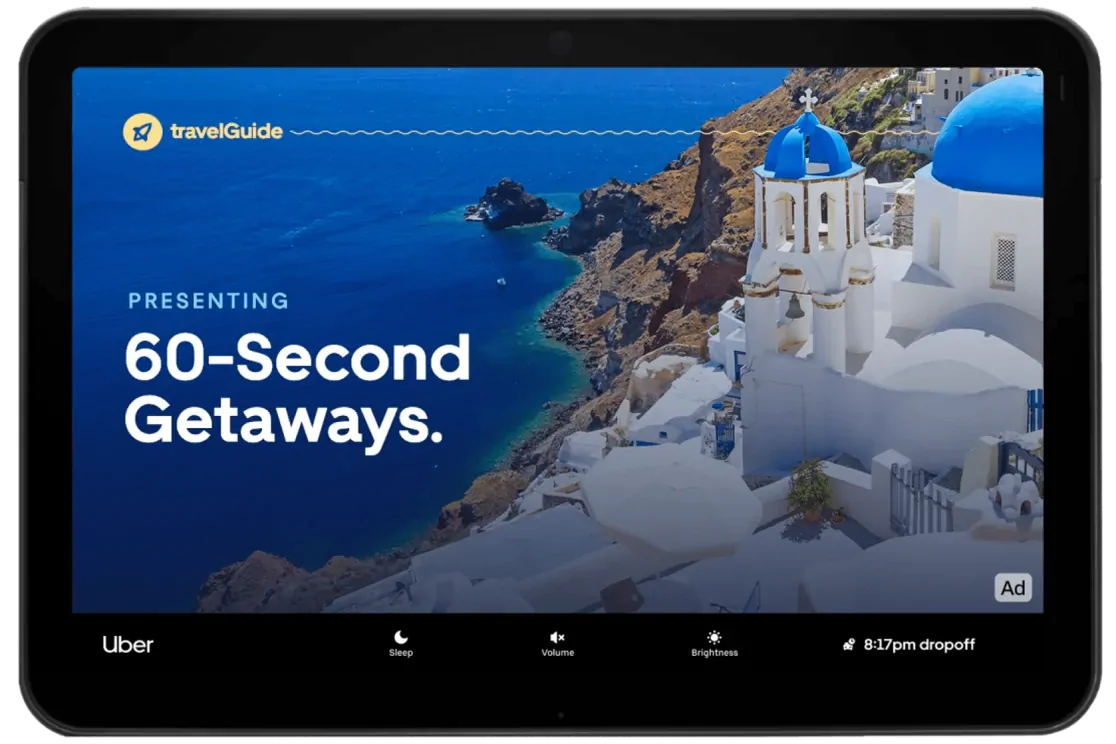
The next evolution of the platform is JourneyTV Presents, which infuses the ride with curated content from a range of media partners. The initiative, launched with companies including Cars.com, Minute Media, The Weather Channel, and Time Out, aims to provide entertainment during longer trips, transforming the car into a mobile content screen.
“flew into Newark airport, headed to World Trade Center. That’s an hour plus ride,” Shuraleff said. “And so now we’re thinking about how we create entertainment and content that’s going to keep people engaged.”
For advertisers, the appeal is placing their messages alongside this curated programming in what Uber claims is a highly engaging setting. Shuraleff noted that the company’s data shows very low opt-out rates from riders.
“The benefit to our brands is as we think about the Uber advertising experience, your content is sitting next to really engaging content, and we see that in the metrics, only one to 2% of riders actually turn off or mute the experience itself,” she added. “So it’s a highly engaging experience.”
From pixels to products
Beyond the screen, Uber is also focused on turning the ride into a physical brand interaction. The company recently launched an in-house creative studio dedicated to creating "surprise and delight" moments that allow consumers to sample and experience products directly. Shuraleff explained that this move was driven by consumer feedback indicating a desire for tangible interactions over purely digital ones.
Uber Advertising’s Creative Studio Aims to Deliver Fluid Ad Experiences
The studio has facilitated several high-profile campaigns, including a holiday activation with Diageo that delivered carolers to people’s doors and a partnership with Covergirl and Ulta for Taylor Swift’s Eras Tour. That campaign surprised concert-goers with wrapped shuttles, friendship bracelets, and product samples. Another initiative with the luxury skincare brand La Mer provided riders heading to F1 events with products inside high-end Uber vehicles.
“What we learned about our consumers was that they wanted to experience the products. They didn't want to just see them on a screen or see them on their phone screen. They wanted to actually feel and touch and experience,” Shuraleff said. “The benefit to our brands and our advertisers is the impact that they're seeing aligned to their business objectives.”
The captive audience has long been the holy grail of advertising. But what about the audience that is literally captive, buckled into the backseat of a car with an average of 20 minutes to spare?
Uber Advertising recently surpassed a $1.5 billion annual run rate and is growing at a rapid clip. The goal is to transform passive travel time into an active, engaging experience for consumers and a valuable touchpoint for brands.
“What we are building here is really harnessing the scale of Uber as a whole with the ability to reach and match advertisers’ brand objectives,” said Jess Shuraleff, director, head of US&C sales, Uber Advertising, in this video interview with Beet.TV.
Putting content in the car
At the heart of this in-car media push is JourneyTV, a platform that places screens in the backseats of Uber vehicles. Through a partnership with T-Mobile, which provides the hardware, the experience is designed to be more than just a rolling billboard.
According to Shuraleff, a rider is greeted by a screen personalized with their name and trip details, alongside information about the driver, creating an immediate point of connection in what she called a “leaned in engaged experience.”
The next evolution of the platform is JourneyTV Presents, which infuses the ride with curated content from a range of media partners. The initiative, launched with companies including Cars.com, Minute Media, The Weather Channel, and Time Out, aims to provide entertainment during longer trips, transforming the car into a mobile content screen.
“flew into Newark airport, headed to World Trade Center. That’s an hour plus ride,” Shuraleff said. “And so now we’re thinking about how we create entertainment and content that’s going to keep people engaged.”
For advertisers, the appeal is placing their messages alongside this curated programming in what Uber claims is a highly engaging setting. Shuraleff noted that the company’s data shows very low opt-out rates from riders.
“The benefit to our brands is as we think about the Uber advertising experience, your content is sitting next to really engaging content, and we see that in the metrics, only one to 2% of riders actually turn off or mute the experience itself,” she added. “So it’s a highly engaging experience.”
From pixels to products
Beyond the screen, Uber is also focused on turning the ride into a physical brand interaction. The company recently launched an in-house creative studio dedicated to creating "surprise and delight" moments that allow consumers to sample and experience products directly. Shuraleff explained that this move was driven by consumer feedback indicating a desire for tangible interactions over purely digital ones.
Uber Advertising’s Creative Studio Aims to Deliver Fluid Ad Experiences
The studio has facilitated several high-profile campaigns, including a holiday activation with Diageo that delivered carolers to people’s doors and a partnership with Covergirl and Ulta for Taylor Swift’s Eras Tour. That campaign surprised concert-goers with wrapped shuttles, friendship bracelets, and product samples. Another initiative with the luxury skincare brand La Mer provided riders heading to F1 events with products inside high-end Uber vehicles.
“What we learned about our consumers was that they wanted to experience the products. They didn't want to just see them on a screen or see them on their phone screen. They wanted to actually feel and touch and experience,” Shuraleff said. “The benefit to our brands and our advertisers is the impact that they're seeing aligned to their business objectives.”